Flanges, Inserts & Adaptors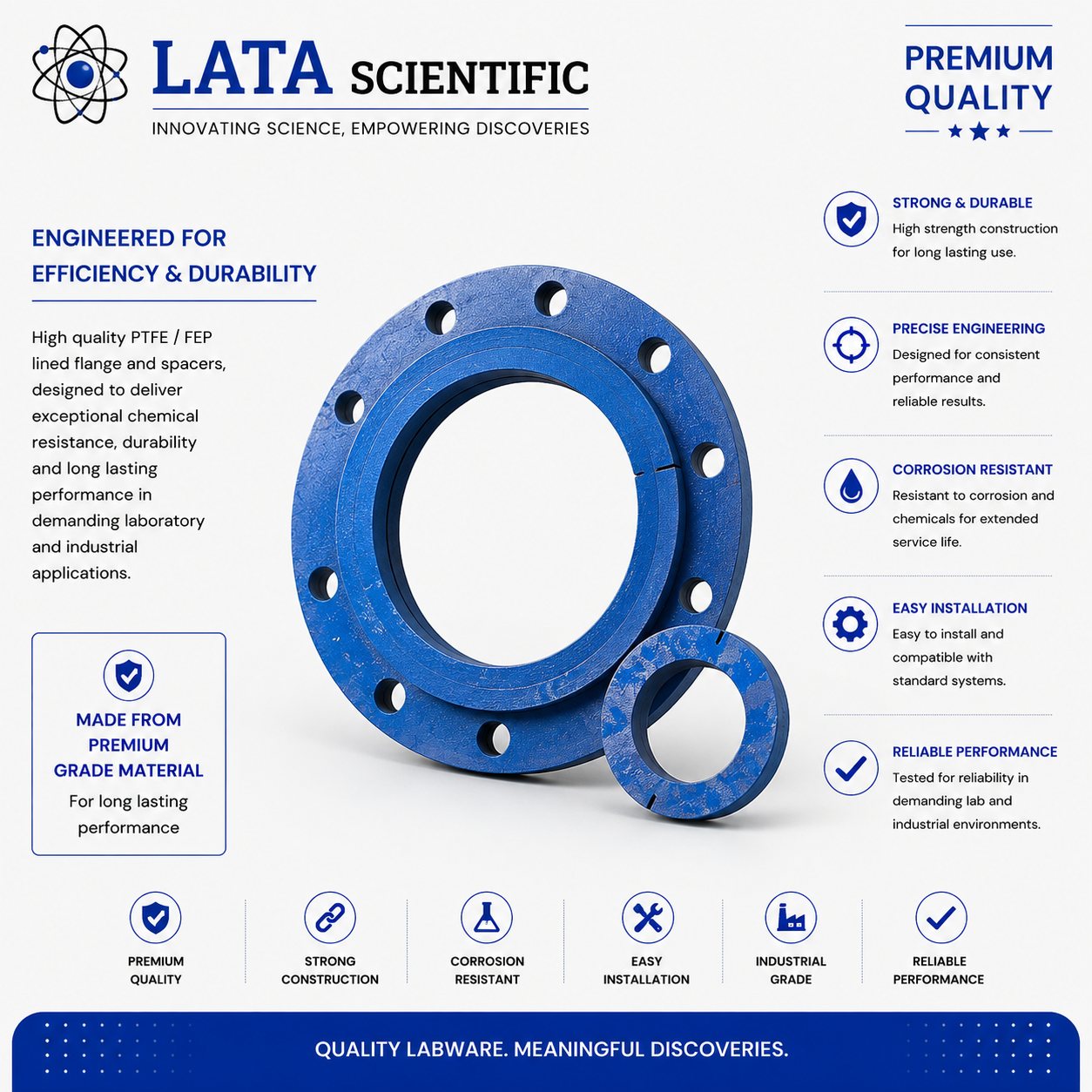
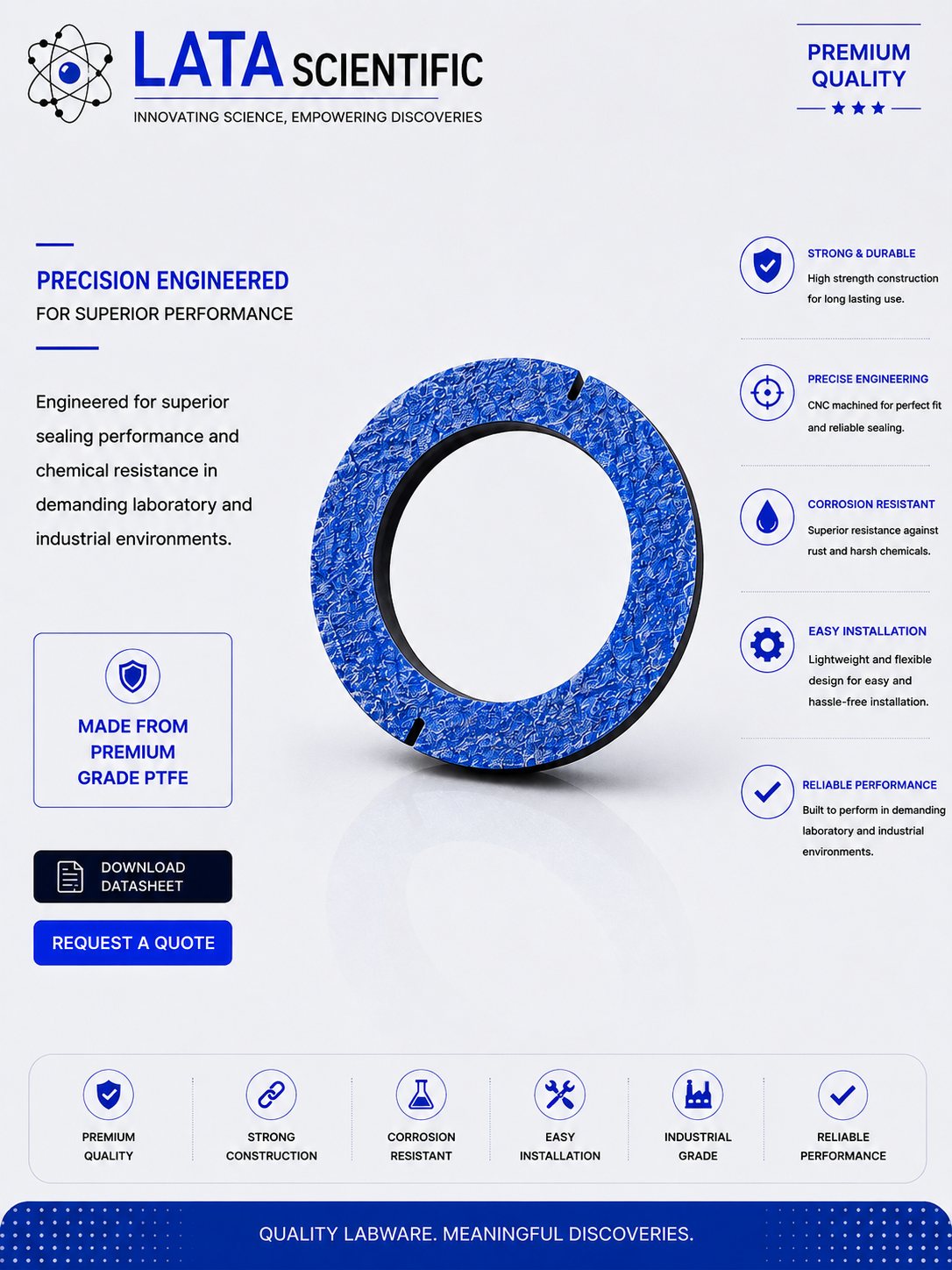
LSCN series split ring insert, DN 15 to DN 600
Split ring type insert used with a backing flange — cast iron with asbestos lining, and composite rubber inserts now supplied for 25 to 150 DN.
| Product type | Split ring type insert |
|---|---|
| Material | Cast iron with asbestos lining |
| Alternative material | Composite rubber, presently supplied for 25 to 150 DN |
| Nominal bore range | DN 15 to DN 600 |
| Used with | Backing flanges |
| Profile types | A, B and C, by size |
| Catalogue reference | LSCN series |
Product overview
The split ring type insert is used with a backing flange. It is what actually bears on the beaded glass end, spreading the bolt load evenly so the flange does not load the glass at a point.
It is made of cast iron with an asbestos lining. New inserts made of suitable composite rubber materials are being introduced, and are presently supplied for 25 to 150 DN sizes.
The range covers DN 15 to DN 600 across twelve catalogue references, in three profile types — A, B and C — with the type changing as bore increases.
Features
Benefits
Applications & industries
Technical data
Figures below are for this product only — every item in the range carries its own dimension table.
| Product type | Split ring type insert |
|---|---|
| Material | Cast iron with asbestos lining |
| Alternative material | Composite rubber, presently supplied for 25 to 150 DN |
| Nominal bore range | DN 15 to DN 600 |
| Used with | Backing flanges |
| Profile types | A, B and C, by size |
| Catalogue reference | LSCN series |
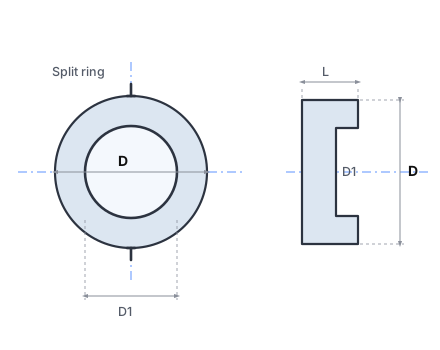
| Cat. Ref. | DN | D | D1 | L | Type |
|---|---|---|---|---|---|
| LSCN 07 | 15 | 34 | 22 | 8 | A |
| LSCN 1 | 25 | 50 | 34 | 10 | A |
| LSCN 1.5 | 40 | 65 | 48 | 10 | A |
| LSCN 2 | 50 | 80 | 61 | 10 | A |
| LSCN 3 | 80 | 110 | 99 | 10 | A |
| LSCN 4 | 100 | 146 | 119 | 10 | A |
| LSCN 6 | 150 | 195 | 165 | 10 | A |
| LSCN 9 | 225 | 280 | 240 | 10 | B |
| LSCN 12 | 300 | 361 | 324 | 10 | B |
| LSCN 16 | 400 | 474 | 431 | 12 | B |
| LSCN 18 | 450 | 555 | 500 | 18 | B |
| LSCN 24 | 600 | 684 | 634 | 10 | C |
All dimensions in mm, transcribed exactly from the catalogue page. Type A, B and C are the three insert profiles shown on the catalogue page.
FAQ
So it can be fitted around a beaded glass end that is already part of an assembled line. A solid ring would have to be threaded on from a free pipe end.
Cast iron with an asbestos lining as standard. Composite rubber inserts are being introduced and are presently supplied for 25 to 150 DN.
Three insert profiles. A covers DN 15 to 150, B covers DN 225 to 450 and C is used at DN 600 — the profile changes as the bead and the flange load change with bore.
Related products
Enquiry
Send the bore, the media, the temperature and pressure, and the flange standard you work to. Drawings and custom sizes welcome.
Send your requirement — media, temperature, pressure, dimensions — and we'll recommend the right product or fabricate it.
Talk to an engineer