Lined Fittings
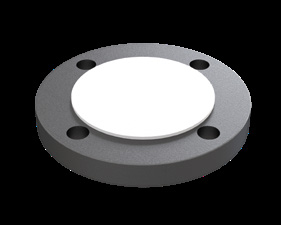
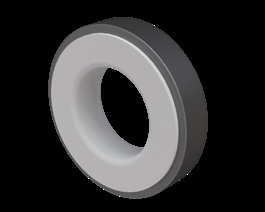
Lined blind flange, NB 1/2" to 16", 12–36.6 mm thick
Lined blind flange to close off a lined line or vessel nozzle — NB 1/2" to 16", available in PTFE, PFA and FEP across the whole range.
| Product type | Lined blind flange |
|---|---|
| Body / steel grade | IS 2062 plate / ASTM A 105 |
| Lining material | PTFE / PFA / FEP |
| Liner standard | ASTM D 1457 / ASTM D 4894-19 (PTFE), ASTM D 3307 (PFA), ASTM D 2116 (FEP) |
| Lining options | Virgin or anti-static (conductive black) PTFE to ASTM D 4894 & D 4895, PFA to ASTM D 3307, FEP to ASTM D 2116 |
| Flange standard | ASME/ANSI B16.5 |
| Flange class | Class 150 standard; Class 300 on request |
| Size range | NB 1/2" to NB 16" |
Product overview
A blind flange closes the end of a lined run, blanks a spare nozzle or isolates a branch for maintenance. The lined version presents a fluoropolymer face to the process so the dead end does not become the corrosion point of the system.
The flange is cut from IS 2062 plate or ASTM A 105 and drilled to ASME/ANSI B16.5 Class 150. Unlike most items in the range, PTFE, PFA and FEP are all marked applicable in every size from NB 1/2" to 16". Thickness runs from 12 mm at NB 1/2" to 36.6 mm at NB 16".
Blind flanges are not drilled with vent holes.
Features
Benefits
Applications & industries
Technical data
Figures below are for this product only — every item in the range carries its own dimension table.
| Product type | Lined blind flange |
|---|---|
| Body / steel grade | IS 2062 plate / ASTM A 105 |
| Lining material | PTFE / PFA / FEP |
| Liner standard | ASTM D 1457 / ASTM D 4894-19 (PTFE), ASTM D 3307 (PFA), ASTM D 2116 (FEP) |
| Lining options | Virgin or anti-static (conductive black) PTFE to ASTM D 4894 & D 4895, PFA to ASTM D 3307, FEP to ASTM D 2116 |
| Flange standard | ASME/ANSI B16.5 |
| Flange class | Class 150 standard; Class 300 on request |
| Size range | NB 1/2" to NB 16" |
| Temperature range | Continuous service to 260 °C (PTFE melting point 327 °C, PFA 306 °C, FEP 260 °C) |
| Pressure rating | ASME/ANSI B16.5 Class 150 flanges as standard; Class 300 available on request |
| Manufacturing standard | ASTM F 1545 |
| Spark testing | Every lined component spark tested at 5000 × E volts (E = liner thickness in mm), to a maximum of 15 000 V |
| Hydro testing | Hydrostatic or pneumatic test according to the lining technique; hydrostatic test on components with vent holes |
| Inspection | Dimensional and visual examination of liner and steel parts — weld aspect, overall dimensions, collar size, liner thickness, surface flaws and paint thickness |
| Vent holes | None — the catalogue excludes blind flanges from vent hole drilling |
| External protection | Zinc epoxy primer, minimum 60 μm dry film, over steel sand-blasted to SA 2.5 |
| Certification | EN 10204 3.1 mill certificates and FDA certification for the fluoropolymer available on request |
| Thickness | 12 mm to 36.6 mm, size dependent |
| Size | Face to face F (±2) | PTFE | PFA | FEP |
|---|---|---|---|---|
| 0.5" | 12 | ✓ | ✓ | ✓ |
| 0.75" | 12.7 | ✓ | ✓ | ✓ |
| 1" | 14.3 | ✓ | ✓ | ✓ |
| 1.5" | 17.5 | ✓ | ✓ | ✓ |
| 2" | 19 | ✓ | ✓ | ✓ |
| 2.5" | 22.4 | ✓ | ✓ | ✓ |
| 3" | 23.9 | ✓ | ✓ | ✓ |
| 4" | 23.9 | ✓ | ✓ | ✓ |
| 6" | 25.4 | ✓ | ✓ | ✓ |
| 8" | 28.5 | ✓ | ✓ | ✓ |
| 10" | 30.3 | ✓ | ✓ | ✓ |
| 12" | 31.8 | ✓ | ✓ | ✓ |
| 14" | 35.1 | ✓ | ✓ | ✓ |
| 16" | 36.6 | ✓ | ✓ | ✓ |
All dimensions in mm. All three lining materials are marked applicable across the full size range.
FAQ
Yes — that is one of its normal uses. Bolt it up with the same torque values used for the rest of the line and cross-tighten as with any flange joint.
Not against another lined flange face, where the flared liners seal against each other. A gasket is needed when it is bolted against a different material.
Related products
Enquiry
Send the bore, the media, the temperature and pressure, and the flange standard you work to. Drawings and custom sizes welcome.
Send your requirement — media, temperature, pressure, dimensions — and we'll recommend the right product or fabricate it.
Talk to an engineer