Glass Valves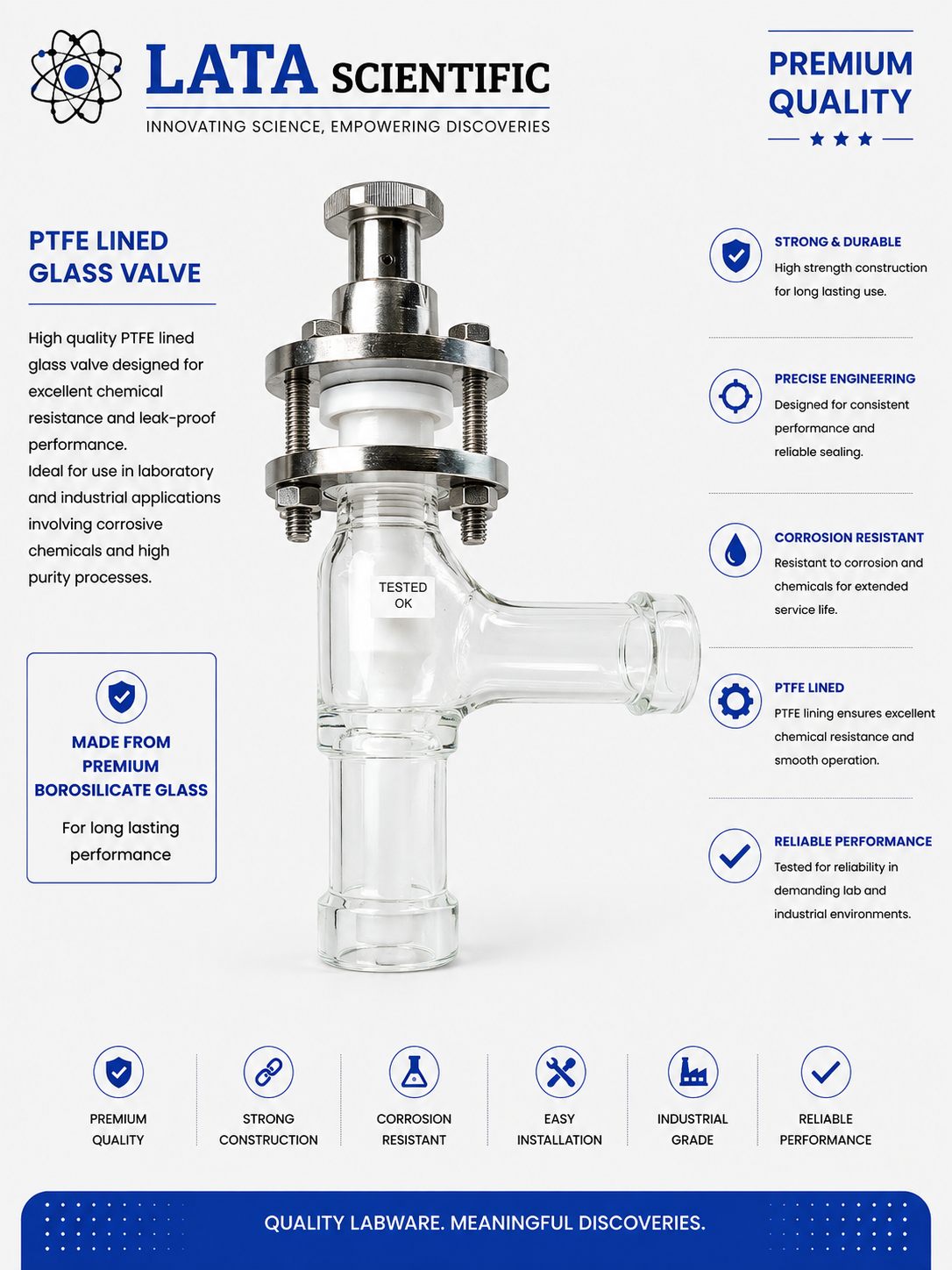
Glass straight through valve, DN 15 to DN 50
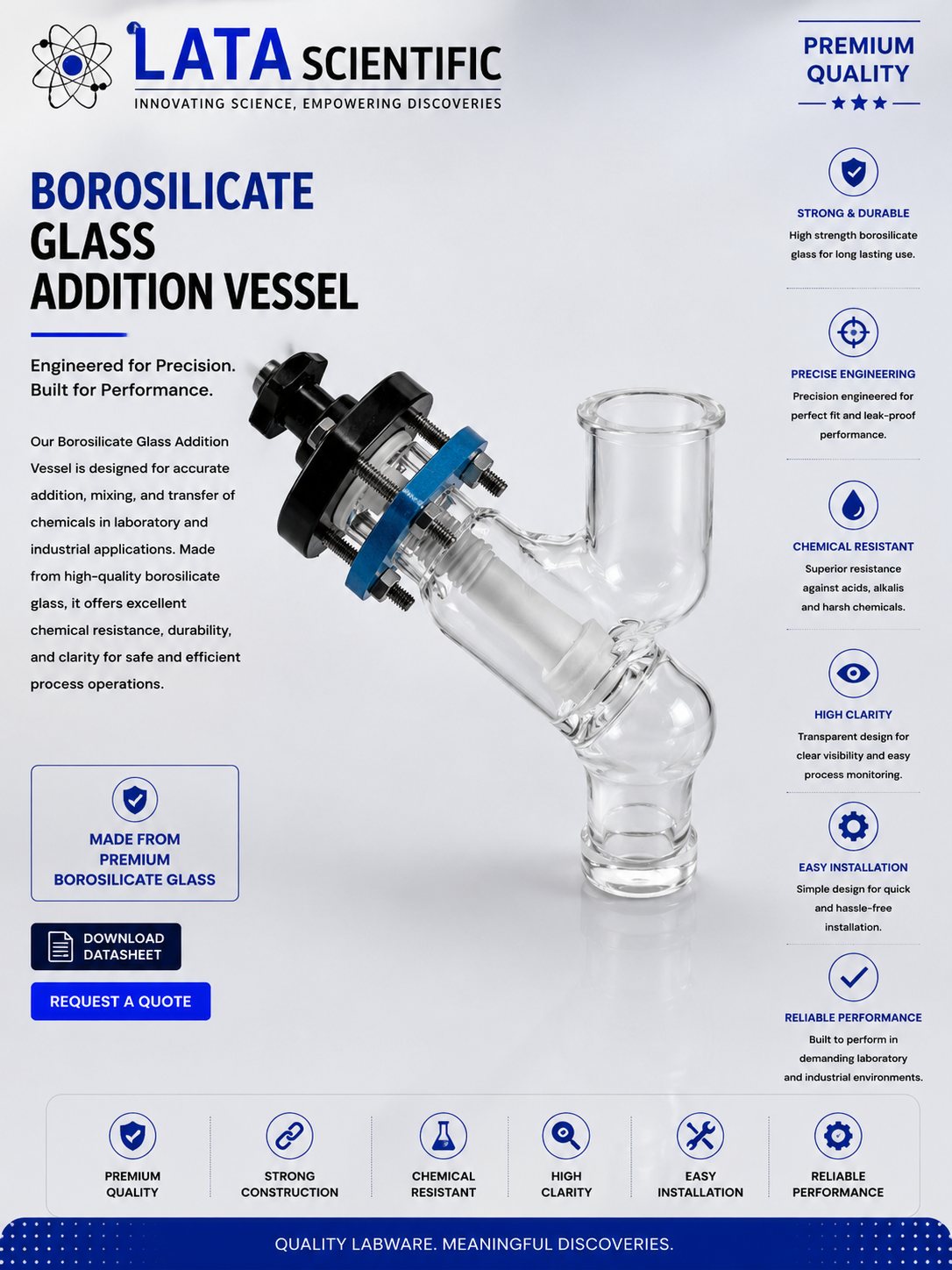
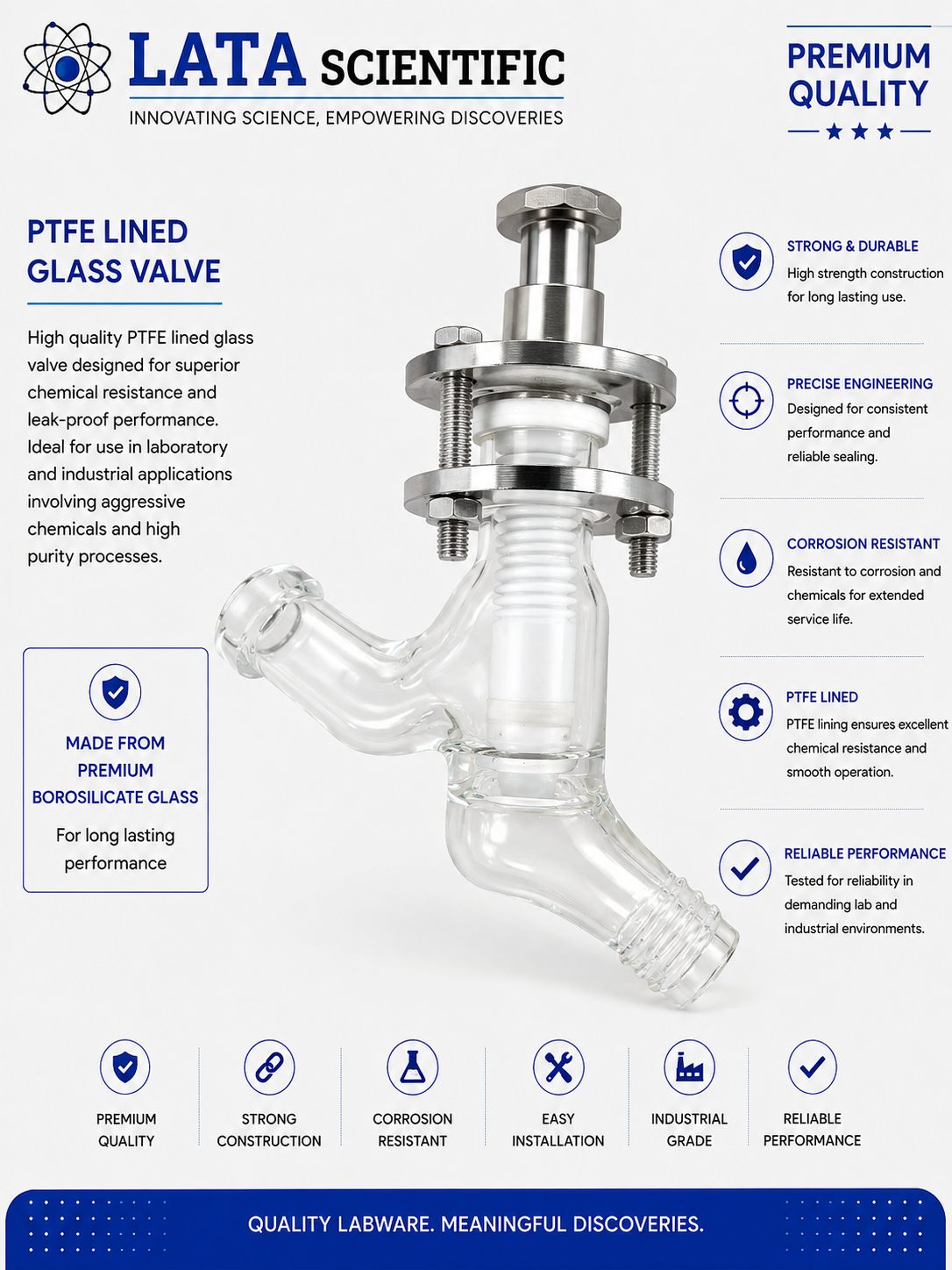
Borosilicate glass straight through valve with a PTFE spindle — full-bore isolation in a glass line, DN 15 to DN 50, in five catalogue sizes.
| Product type | Glass straight through valve |
|---|---|
| Material | Borosilicate 3.3 |
| Spindle | PTFE |
| Nominal bore range | DN 15 to DN 50 |
| End connection | Beaded glass ends with backing flanges and PTFE-envelope gaskets |
| Flange drilling | See the drilling table — BS 10 Table E, BS 10 Table F and ASA drilling available |
| Pressure rating | Not published on the valve catalogue page — confirm with us for your duty |
| Temperature rating | Not published on the valve catalogue page — confirm with us for your duty |
Product overview
The straight through valve is the general-purpose isolation valve of a glass pipeline. Flow passes through the body in line, and the PTFE spindle closes onto the seat to shut it off. Because the body is borosilicate, the operator can see both the media and the state of the valve without opening anything.
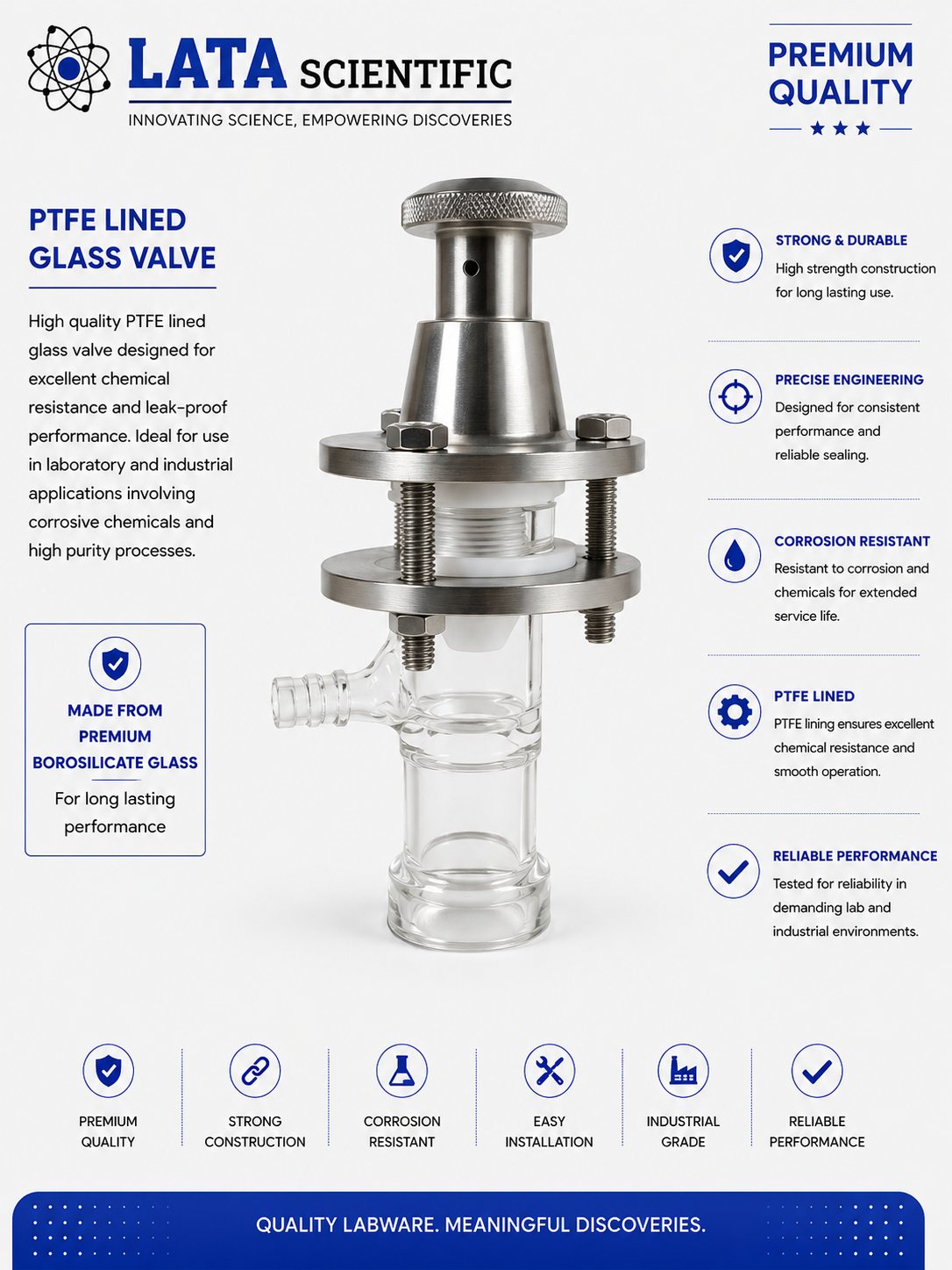
The catalogue prints one line under this table that matters more than it looks: the spindle is made of PTFE. That is what lets the valve run unlubricated on aggressive media without seizing, galling or contaminating the batch — the two materials in contact with the process are glass and PTFE, nothing else.
Five references cover DN 15 to DN 50. Note LSPV1.5/1, which is a reducing build: a DN 40 line connection with a DN 25 branch, at the same 225 mm length as the full-bore DN 40.
Features
Benefits
Applications & industries
Technical data
Figures below are for this product only — every item in the range carries its own dimension table.
| Product type | Glass straight through valve |
|---|---|
| Material | Borosilicate 3.3 |
| Spindle | PTFE |
| Nominal bore range | DN 15 to DN 50 |
| End connection | Beaded glass ends with backing flanges and PTFE-envelope gaskets |
| Flange drilling | See the drilling table — BS 10 Table E, BS 10 Table F and ASA drilling available |
| Pressure rating | Not published on the valve catalogue page — confirm with us for your duty |
| Temperature rating | Not published on the valve catalogue page — confirm with us for your duty |
| Catalogue reference | LSPV series, e.g. LSPV1.5 = DN 40 |
| Face to face | 125 mm to 300 mm |
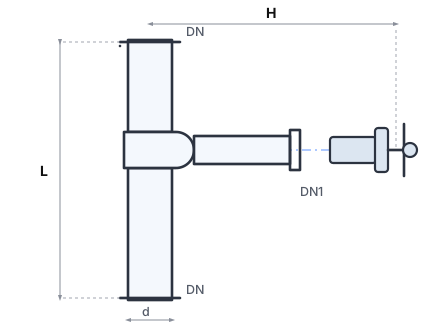
| Cat. Ref. | DN | DN1 | d | L | H |
|---|---|---|---|---|---|
| LSPV07 | 15 | 15 | 12 | 125 | 90 |
| LSPV1 | 25 | 25 | 18 | 175 | 175 |
| LSPV1.5/1 | 40 | 25 | 18 | 225 | 175 |
| LSPV1.5 | 40 | 40 | 26 | 225 | 200 |
| LSPV2 | 50 | 50 | 38 | 300 | 220 |
All dimensions in mm, transcribed exactly from the catalogue page. The catalogue adds one note to this table: “Spindle is made of PTFE.”
FAQ
PTFE — the catalogue states it explicitly for this valve. It runs unlubricated, will not seize on aggressive media, and keeps the wetted path to glass and PTFE only.
A reducing build: DN 40 on the line side and DN 25 on the branch, at the same 225 mm face-to-face as the full-bore DN 40 (LSPV1.5).
The catalogue page is dimensional and publishes no pressure or temperature figure, so we do not quote one. Send us your duty and we will confirm it against the drawing.
Related products
Enquiry
Send the bore, the media, the temperature and pressure, and the flange standard you work to. Drawings and custom sizes welcome.
Send your requirement — media, temperature, pressure, dimensions — and we'll recommend the right product or fabricate it.
Talk to an engineer