Glass Valves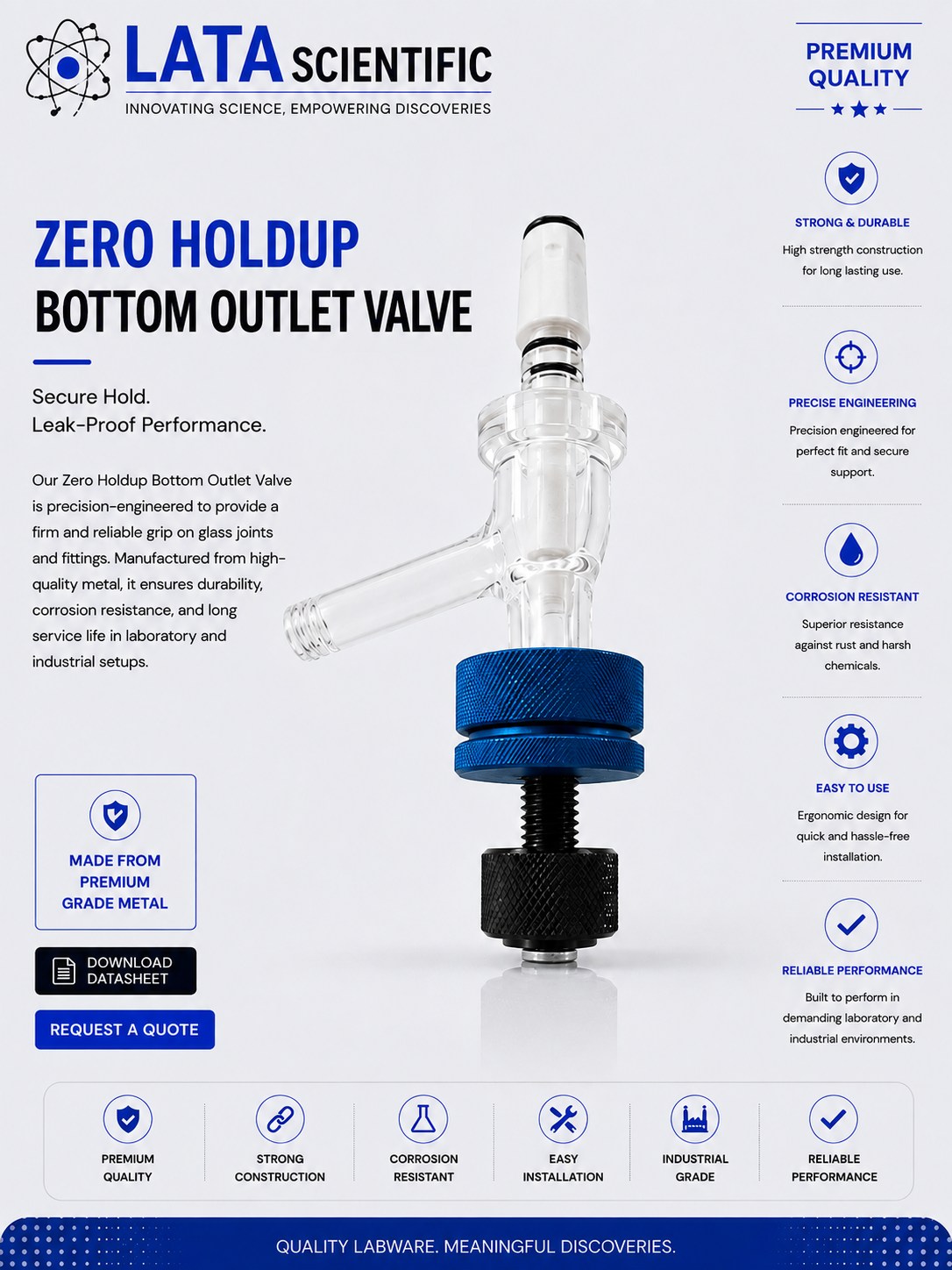
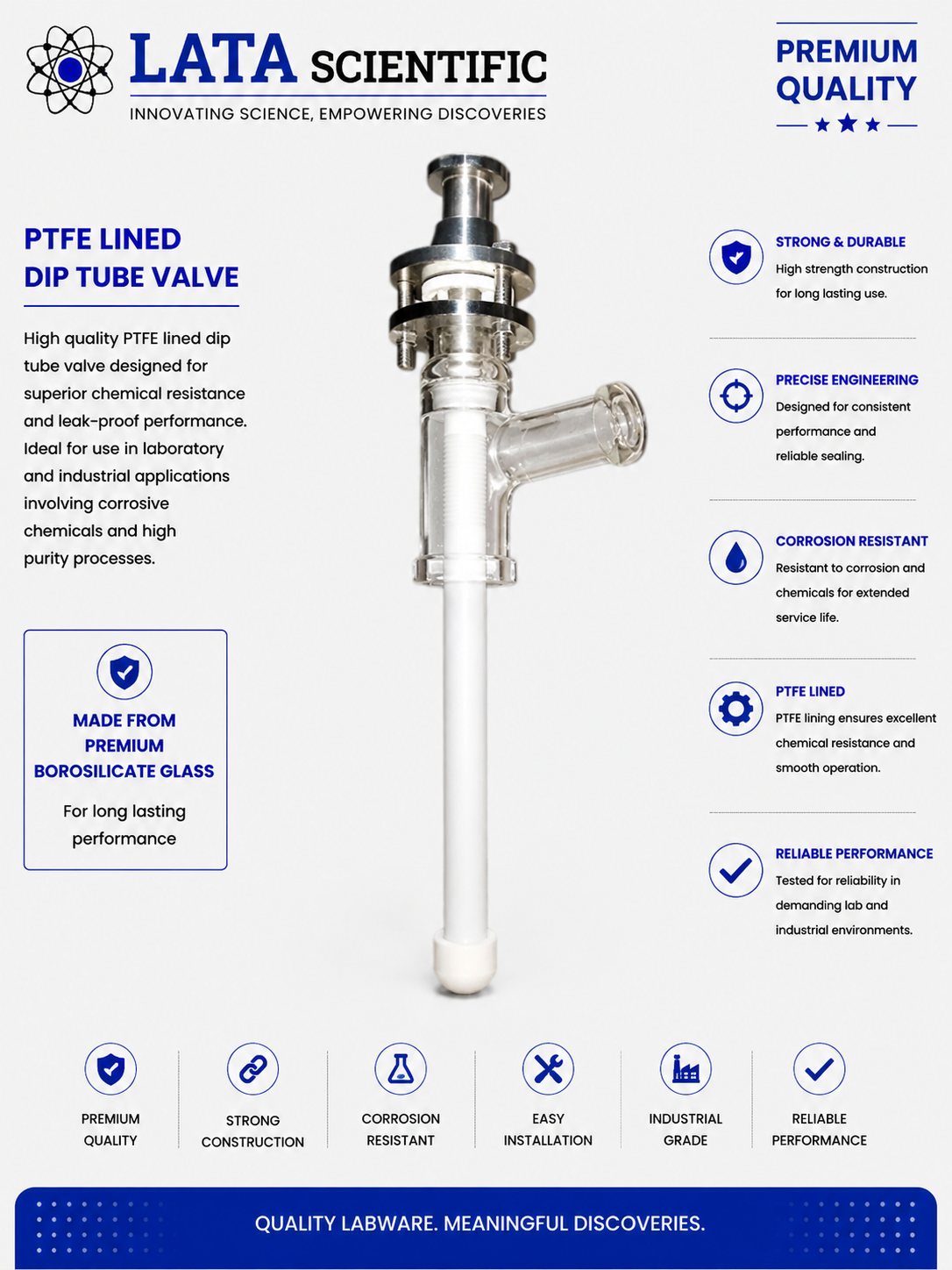
Glass bottom outlet valve, DN 40 and DN 50
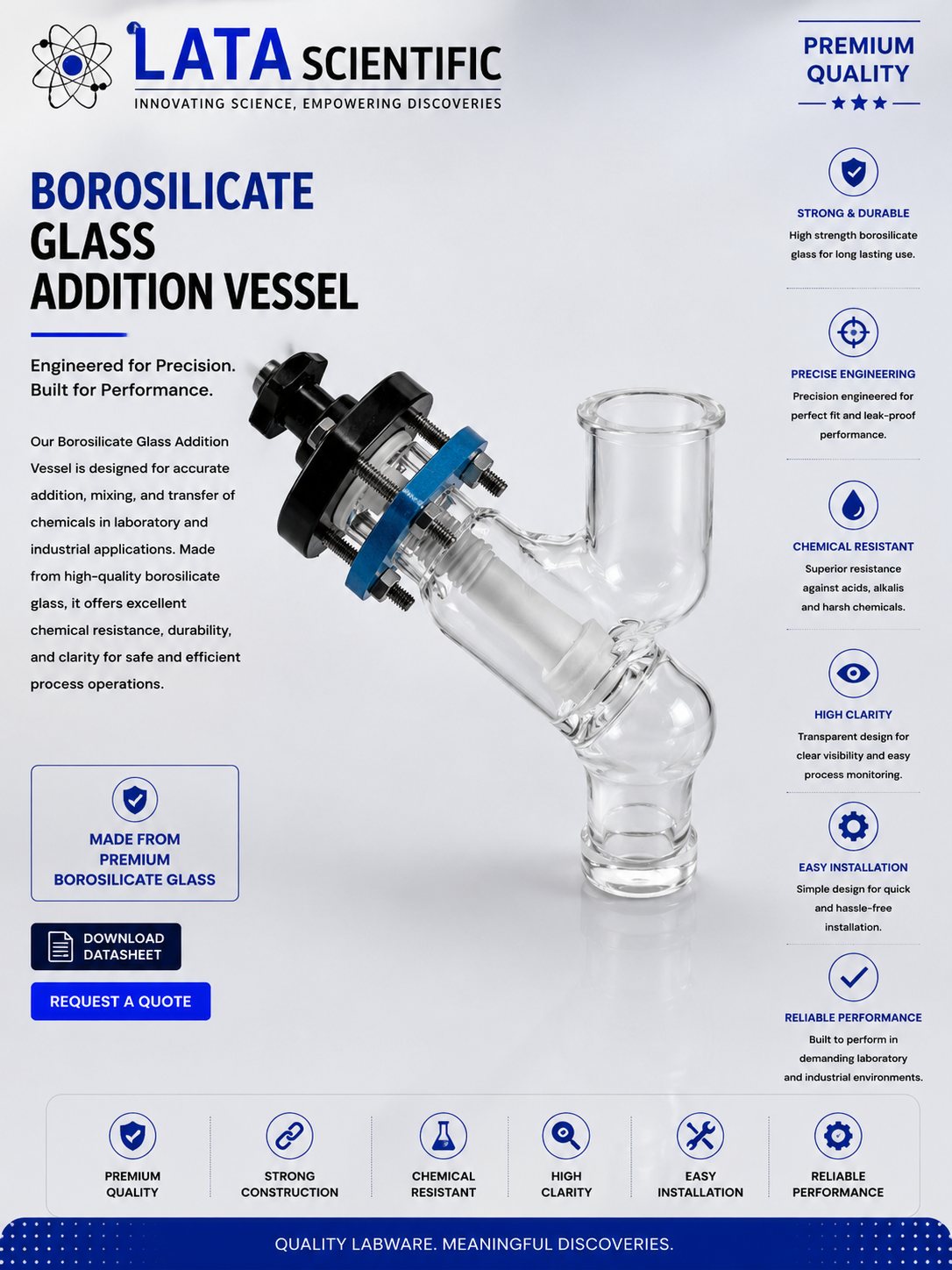
Borosilicate glass bottom outlet valve that prevents solids or liquid accumulating in a vessel's bottom outlet — for spherical or cylindrical vessels, DN 40 and DN 50.
| Product type | Glass bottom outlet valve |
|---|---|
| Material | Borosilicate 3.3 |
| Spindle | PTFE |
| Nominal bore range | DN 40 and DN 50 vessel connection |
| End connection | Beaded glass ends with backing flanges and PTFE-envelope gaskets |
| Flange drilling | See the drilling table — BS 10 Table E, BS 10 Table F and ASA drilling available |
| Pressure rating | Not published on the valve catalogue page — confirm with us for your duty |
| Temperature rating | Not published on the valve catalogue page — confirm with us for your duty |
Product overview
The catalogue is explicit about what this valve is for: it prevents the accumulation of solid or liquid in the bottom outlet of a vessel, and it can be incorporated in any spherical or cylindrical vessel.
That is the problem it solves. Fit an ordinary valve below a vessel's bottom nozzle and the nozzle plus the valve body above the closure form a pocket that never drains. Product sits there between batches, settles, degrades, and contaminates the next charge. A bottom outlet valve closes at the vessel floor instead, so there is no pocket to accumulate in.
Two references are listed. Both share the same L, L1 and B, and both take a DN 25 bottom outlet (DN2) — what changes is the vessel connection DN and the side outlet DN1.
Features
Benefits
Applications & industries
Technical data
Figures below are for this product only — every item in the range carries its own dimension table.
| Product type | Glass bottom outlet valve |
|---|---|
| Material | Borosilicate 3.3 |
| Spindle | PTFE |
| Nominal bore range | DN 40 and DN 50 vessel connection |
| End connection | Beaded glass ends with backing flanges and PTFE-envelope gaskets |
| Flange drilling | See the drilling table — BS 10 Table E, BS 10 Table F and ASA drilling available |
| Pressure rating | Not published on the valve catalogue page — confirm with us for your duty |
| Temperature rating | Not published on the valve catalogue page — confirm with us for your duty |
| Catalogue reference | LSBAL series, e.g. LSBAL2 = DN 50 |
| Bottom outlet (DN2) | DN 25 on both sizes |
| Overall length L | 260 mm |
| Seat length L1 | 105 mm |
| Width across B | 190 mm |
| Vessel compatibility | Any spherical or cylindrical vessel |
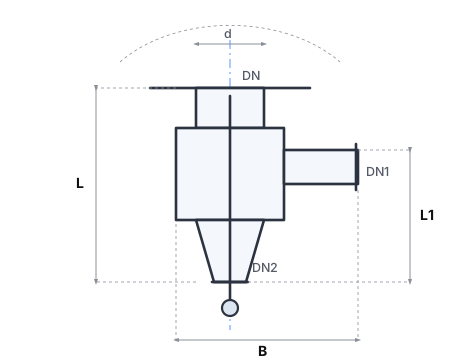
| Cat. Ref. | DN | DN1 | DN2 | d | L | L1 | B |
|---|---|---|---|---|---|---|---|
| LSBAL1.5 | 40 | 25 | 25 | 26 | 260 | 105 | 190 |
| LSBAL2 | 50 | 40 | 25 | 38 | 260 | 105 | 190 |
All dimensions in mm, transcribed exactly from the catalogue page. DN is the vessel connection, DN1 the side outlet and DN2 the bottom outlet. L, L1 and B are identical on both references.
FAQ
In the catalogue's own words, it prevents the accumulation of solid or liquid in the bottom outlet of a vessel. It seats at the vessel floor so there is no pocket below the outlet for product to sit in.
The catalogue states it can be incorporated in any spherical or cylindrical vessel. Send us the vessel drawing and nozzle detail and we will confirm the arrangement.
That is how the table is printed — DN2 is 25 for both LSBAL1.5 and LSBAL2. The vessel connection DN and side outlet DN1 are what change between them.
Related products
Enquiry
Send the bore, the media, the temperature and pressure, and the flange standard you work to. Drawings and custom sizes welcome.
Send your requirement — media, temperature, pressure, dimensions — and we'll recommend the right product or fabricate it.
Talk to an engineer